
As climate change, environmental challenges, and social disparities become more palpable, both public and private interest in sustainability is growing, with universities playing an increasingly visible role in research, innovation, and engagement.
Across continents and supported by government initiatives, institutions are expanding sustainability programmes, integrating climate literacy into curricula, and partnering with communities to test solutions.
With the aim of placing sustainability at the centre of what we do, we’ve partnered with Sulitest to advance sustainability literacy, developing critical understanding of environmental systems, socio-ecological interdependencies, and sustainable practices to inspire long-term behavioural change. Through its sustainability knowledge assessment, adjacent resources and continuous advocacy, the initiative aims to inspire long-term systemic change and improve sustainability education.
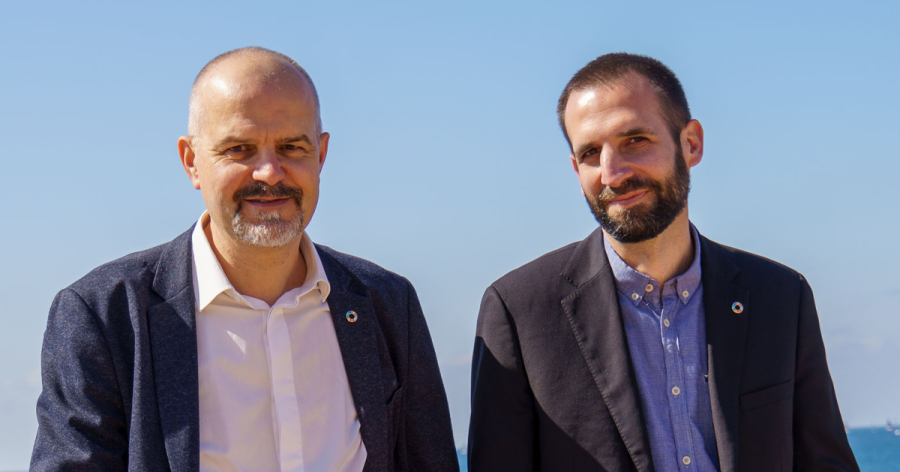
Sulitest, co-founded by Aurélien Decamps and Jean-Christophe Carteron, is an international movement with the mission to mainstream sustainability knowledge worldwide. Sulitest provides tools to measure and improve sustainability literacy, for both universities and companies. “
1. How was the idea of Sulitest first conceived?
Aurélien: Our world faces significant social, economic and environmental challenges. To address them, we believe it is vital that all individuals—irrespective of discipline, professional, or geography—share the understanding of the challenges we face and how to address them.
After working in higher education for many years, we created Sulitest to support a systemic change in the sector. We wanted to enable institutions to measure and improve sustainability literacy through our tools and advocacy. And that is how the idea of Sulitest was born.
2. You’ve previously worked at the same institution, albeit in different capacities. How do you feel that your different backgrounds enrich Sulitest?
Jean-Christophe: I believe what brings us together is an awareness of the challenges and the essential role higher education must play.
As a researcher and professor, Aurélien has always showed why sustainability is imperative, regardless of students’ future careers. He brings essential academic rigor to establishing standards and building robust tools.
For my part, I was fortunate to be one of the first sustainable development directors in higher education worldwide. Consequently, I had to pioneer many initiatives by working with university presidents, professors, UN officials, programme directors, those managing the campus impact, and CEOs. I believe I’ve become an expert at driving change within systems that aren’t always eager to change…and that’s what Sulitest does.
3. ‘Sustainability Literacy’ is a relatively new term, what does it mean to be ‘literate’ in that regard?
Jean-Christophe: We define Sustainability Literacy as the knowledge, skills, and mindsets that compel an individual to become deeply committed to building a sustainable future and allow him or her to make informed and effective decisions to this end.
4. What is the most surprising trend you’ve noticed from TASK™ results? What can we learn from this about knowledge gaps within sustainability?
Aurélien: The numerous completed assessments provide a rich dataset on students’ sustainability knowledge. Institutions participating in TASK™ can share metadata such as students’ major and year of study, allowing us to identify meaningful patterns and nuances across disciplines.After working in higher education for many years, we created Sulitest to support a systemic change in the sector. We wanted to enable institutions to measure and improve sustainability literacy through our tools and advocacy. And that is how the idea of Sulitest was born.

Aurélien (cont.): Our July 2025 report revealed that students in Environmental and Sustainability Studies programs scored highest overall, while Business Studies students showed a left-skewed distribution with generally lower scores, with interesting subject-specific differences too. A detailed table can be found in our report.
This points to the need for targeted support to foster a truly holistic understanding—and to build sustainability as a shared language across disciplines. Tailoring educational approaches to each field’s context can help ensure that all graduates, regardless of discipline, are equipped to engage meaningfully with sustainability challenges and opportunities.
5. What’s one sustainability myth you wish could be debunked once and for all?
Jean-Christophe: In fact, two myths: believing that it is impossible, and believing that it will be easy.
6. What are the different strategies that universities usually use to deploy TASK™?
Aurélien: We encourage universities to use TASK™ across all their programs longitudinally, that is, when students start their programme and before they graduate. This “entry- and exit-testing” approach enables universities to get a baseline assessment data and measure progress. The data emerging from these two instances can therefore be used to identify curricular gaps, compare cohorts and inform the continuous improvement of sustainability education efforts, as described here by Onsi Sawiris Business School, one member of our community.
Beyond the institutional value TASK™ offers, it acts as a great pedagogical tool, helping students grasp the breadth of sustainability and get a “personal compass” of what they could learn more about. Some schools, like ESCP Business School, bring this experience into the classroom, by facilitating peer-learning exercises, where students review their TASK™ results, research subjects with lower scores, and present that their peers.
7. Are there any plans to update TASK™ as the science of sustainability evolves?
Aurélien: Questions in TASK™ are constantly updated. Firstly, each question created has an expiration date to ensure we update it as new reports or information are released. Secondly, at every assessment answered, we gather data on how newly written questions are answered, to inform their psychometric parameters before they are included in the assessment as graded question.

8. TASK™ is already available in French and English, are there any efforts to make it available in more languages in the future?
Jean-Christophe: Yes, TASK™ has recently been translated into Spanish, enabling us to collaborate with Latin American and Spanish universities. To date, 30 institutions have invited their students and staff to take TASK™ in Spanish as part of our pilot, in the second half of 2025, prior to its launch in Spanish in Q1 2026.
9. Has user feedback shaped TASK™ over time?
Aurélien: Yes, the feedback from universities and candidates is a key driver of our roadmap. As students receive their results, the question that followed was often “how can I improve?”. This led us to develop the TASK™ Study Guides, which offer personalised, subject-specific insights and curated resources based on TASK™ assessment results. TASK™ Study Guides are designed to complement teaching in Higher Education, helping institutions transform assessment scores into individualised opportunities for learning.
10. Are any insights gathered from TASK™ available to the public?
Jean-Christophe: Sulitest has contributed to the United Nations High-Level Political Forum (HLPF) for many years, where we publish our annual report which is publically available here.
11. Are there any specific measures, initiatives, or sustainability guidelines you can recommend to an institution to advance their sustainability journey?
Aurélien: Unfortunately, there is no one-size-fits-all solution. Therefore, I don’t have a magic formula, but I do recommend following key principles and avoiding common pitfalls. Among the most frequent mistakes is failing to consider the programme within the broader context of the student’s entire experience. A second common error is overlooking the fact that problems are interconnected, requiring a systemic, ecosystem-based vision beyond a single course or an inspiring lecture, treating sustainability as a lens which prompts students to ask critical questions wherever they go.
For me, the first step for any programme director is to draw inspiration from established sustainability competency frameworks (like those from UNESCO, GreenComp, etc.) and then determine how the learning goals of their own programme need to evolve. And, of course, it is crucial to define how this progress will be measured.
12. What inspires you the most about the work that Sulitest does?
Jean-Christophe: What excites me most about this venture is discovering a multitude of inspiring initiatives and people committed to making higher education a major force in building a sustainable world. With TASK™ we provide a key piece that was missing from the puzzle within an ecosystem that is completely reinventing itself. On our own scale, we are striving to exist in perfect symbiosis with this collective momentum and look forward to building exceptional partnerships in the coming years…
ⓘ This interview is part of our ongoing dialogue on how Knowledge E can help advance sustainability
in Higher Education for institutions in the MENA region and internationally.